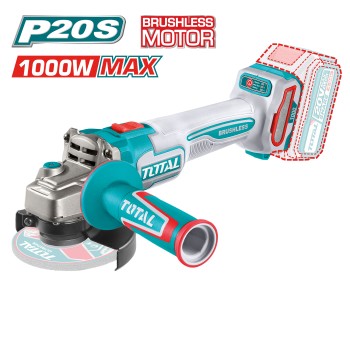
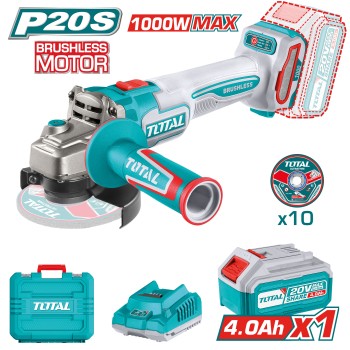
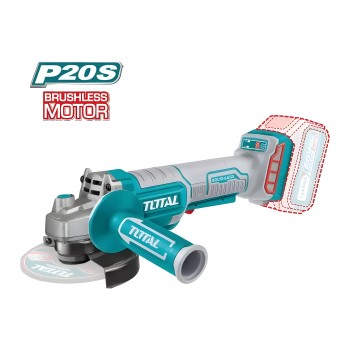
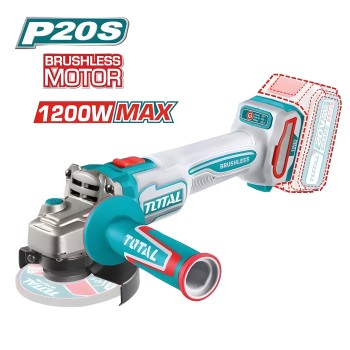
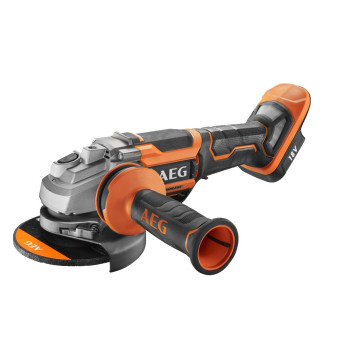
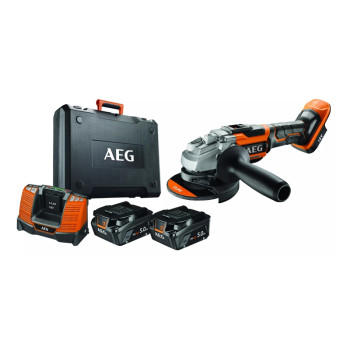
Initially, angle grinders were intended for craftsmen with a certain level of experience. This equipment gradually evolved against a backdrop of a multitude of possible uses. It can be used for cutting, polishing, and rust removal from metal surfaces, among other things. Today, the grinder can be used in several different fields, including DIY. It is a multi-purpose tool that can also be used for sculpting, stripping, and even assembly work, provided that its user knows how to handle it properly. Operation and uses — discover everything about the angle grinder.
What is an angle grinder?
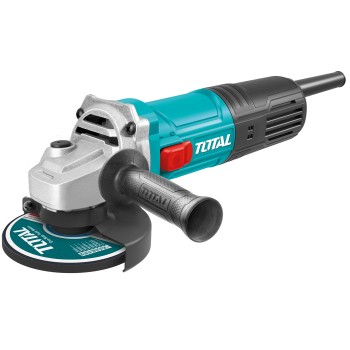
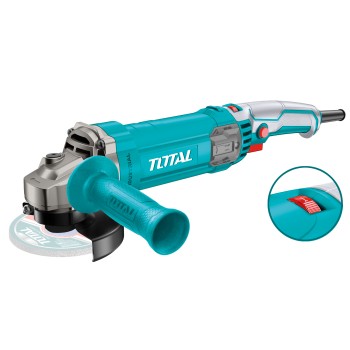
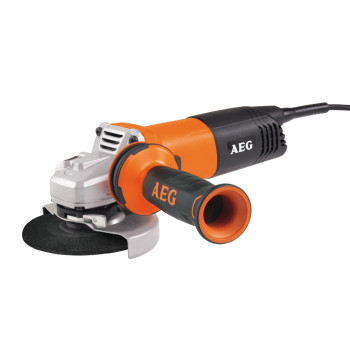
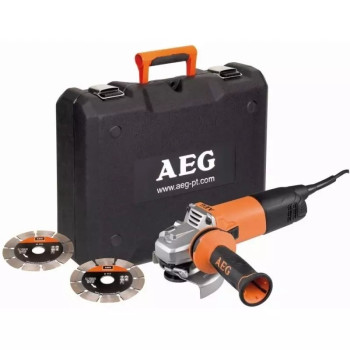
The angle grinder is a tool belonging to the so-called handheld category. It is equipped with a motor allowing it to be used for different purposes (cutting, polishing, grinding…). Also known as a disc grinder or disc cutter, this tool, depending on the model, can have several power sources. It can be powered by a petrol engine, by electricity, batteries, or by compressed air.
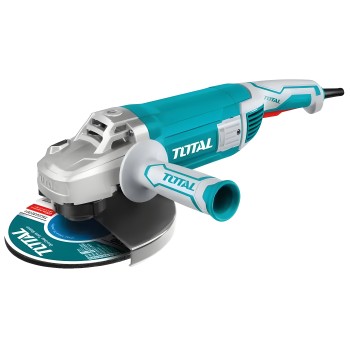
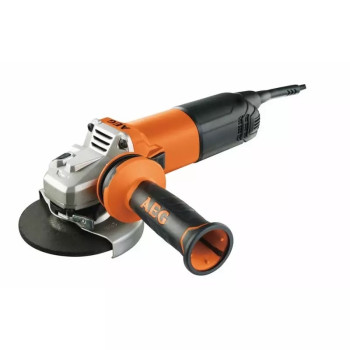
A key feature of a disc grinder is of course the discs it uses. For small grinders, the disc size is either 115 mm or 125 mm. However, prefer angle grinders with a disc size of 125 mm. The 115 mm disc is not very recommended, as its cutting depth is quite shallow. For larger grinder models, opt for 230 mm discs.
The disc grinder: between simplicity and versatility
It is clear that this is the welding and DIY tool that has evolved the most in recent years. The simplicity of this equipment lies in its operation. A powerful motor averaging 800 Watts drives a threaded shaft through a fairly direct spiral. The role of this shaft is primarily to support the discs and the various accessories that will be added to the angle grinder. Unlike the principle of most professional welding and DIY tools, this one has the tool axis fixed perpendicularly to the motor axis. The finished product reveals a right angle, from which this grinder gets its name.
Another feature of the disc grinder is that it is extremely versatile. It is primarily used for grinding, scraping, cutting, or shaping materials such as metals, tiles, concrete, and other construction materials. It is also a tool used to clean certain surfaces, polish them, or sharpen cutting tools.
The different types of grinders
Made of cast iron, the first angle grinders were rather heavy. Even back then, although not very practical due to their shape, they were tools that revolutionized the lives of craftsmen. Now, things are no longer quite the same. The use of disc grinders is much simpler and their implementation is fairly easy. As for the weight, it has decreased considerably over the evolution of models. On the current grinder market, there are several models, each with their own strengths and characteristics.
- Mini angle grinders: as the name suggests, this is a smaller model. It can accommodate discs with a diameter of up to 115 mm. This type of grinder is suited for cutting metal, while it struggles a bit more on concrete.
- One-handed angle grinders: they are lightweight and easy to handle, particularly with one hand. The discs that fit this device are generally flexible and have an approximate diameter of 125 mm. This type of grinder is more efficient and can handle complex materials such as thin concrete slabs.
- Two-handed angle grinders: this is the most widespread grinder model and the most capable of meeting the expectations of professionals. They can be fitted with cutting discs of approximately 230 mm, with the capacity to cut concrete floors as well as fairly thick concrete slabs.
To decide which type of grinder to go for, first determine the type of work the tool will be used for. Whether the jobs are small or large in scope, this will narrow down your options.
Criteria for choosing an angle grinder
The choice of angle grinder must be based on certain well-defined criteria.
Disc size
The disc size will depend on the cutting and grinding work you wish to carry out. Only based on that will you be able to choose the right disc size. Note, however, that the disc size must also depend on the motor power.
Power, speed, and rpm of angle grinders
You need to be aware of the type of power supply (electric, petrol, or compressed air) of the grinder you choose in order to determine its power. Also note that the success of certain types of tasks depends on the power of this tool. This criterion will certainly help you in your choice. For polishing, plan on an angle grinder of at least 500 Watts. For sanding, the power must be at least 1000 Watts. For cutting easy or resistant solid materials, plan on 1500 and 2500 Watts respectively for your machine.
The no-load speed indicated for a disc grinder is important, as it allows you to deduce the maximum power that the grinder can deliver. A high no-load speed reveals a powerful motor. The opposite is true of a motor with a low no-load speed.
As for the loading speed, it can range from 700 to 12,000 rpm. As for the discs of this tool, they generally rotate between 5,000 and 10,000 revolutions per minute.
The handle
Opt for adjustable handles rather than fixed handles. The advantage is that you will be much more comfortable during cutting and grinding.
The grinder housing and weight
An angle grinder with a stable and sturdy housing guarantees a longer service life for the tool. It also allows the machine to effectively withstand moisture and dust. A good housing will effectively protect the electronics of the device. As for the weight of the grinder, it ranges between 1.5 and 6 kilograms.
Ventilation and cooling
The cooling and ventilation system of the grinder is the last criterion you should examine. It is therefore crucial to verify that the angle grinder you choose benefits from good ventilation in order to avoid overheating. Should overheating occur, the cooling function would be your greatest ally. Keep this in mind when making your choice.
How to use an angle grinder?
When cutting, the ideal approach is to attack the material from above. If you come at it from the sides, you risk kickback. When your disc does not follow the correct line, stop the machine and disengage it to change direction. Avoid forcing it, as the weight of the grinder is already a great asset. When grinding metal parts, it is recommended to attack at an angle of 20˚ between the disc and the element to be ground.
The different uses of the angle grinder
The use cases for the angle grinder are diverse.
For cutting metal
This is the most common use of the disc grinder. In order to cut metal effectively, you will need a metal cutting blade fitted to the grinder. Mount a metal cutting wheel in the disc grinder, then lift the long part of the rebar. Then hold it firmly in place and let the cutting wheel run through the metal. This will allow the weight of the grinder to do most of the work.
For cutting concrete, tiles, and stone
Make a precise mark on the cutting outline at the front and back of the tile. Then place the tile on your workbench so that it cannot move, and make notches along the outline, mainly at the front, using a diamond blade. A grinder with this type of blade easily handles difficult cuts.
What are the safety measures for using an angle grinder?
The rotation speed of grinders is very high and can quickly reach 11,000 rpm. As such, it is important to take a number of usage precautions. You should know that the first thing to have is a pair of gloves, followed by a face shield. Then, always wear a dust protection helmet and make sure the protective guard is in place.
You should also know that you must absolutely unplug the angle grinder when changing the disc. When using the machine, maintain a firm grip with both hands after having properly secured the handles. Make sure that debris is projected directly downward and avoid having bystanders walking close to you. Above all, do not keep flammable materials near you, as sparks may come into contact with them.


 Germany
 Netherlands
 Croatia
 Denmark
 Finland
 Greece
 Ireland
 Portugal
 Sweden
 Norway
 Bulgaria
 Estonia
 Latvia
 Lithuania
 Poland
 Czech Republic
 Romania
 Slovakia
 Slovenia
 Hungary
 Spain
Spain



 2-year warranty