In the professional world, mastering processes and working techniques is a key to success. Whatever the field, this holds true, especially in the world of welding where techniques and working tools play an important role in achieving the expected result.
Today, there are many welding tools so that both professionals and beginners can make a precise choice. This is the case, for example, with the various accessories that make up the MIG-MAG Torch. How do you choose them? What are their characteristics? Here is a guide that covers the subject in more detail.
MIG-MAG welding
MIG-MAG welding is a type of semi-automatic welding process. MIG stands for Metal Inert Gas and MAG is defined as Metal Active Gas. According to this method, the fusion of metals is achieved through thermal energy. This is an intense heat that occurs in a protective atmosphere and is released through an electric arc (Carbon dioxide, Argon, Helium). For a good result, the weld pool is protected by an inert gas against contaminants present in the working environment. This welding technique is much more widely adopted in industries (ships, railways, heavy equipment, factories, etc.) due to the precision it offers and the time savings in the work. It is adopted to optimize time management and increase production in a company. All of this is made possible through its coated electrode.
Welding involves very high temperatures. In the MIG MAG process, the weld pool can exceed a temperature of 2000 °C. The cooling system is therefore an element that characterizes the choice of equipment. There are two well-known methods. These are:
· Natural cooling: this is achieved by the penetration of natural air into the ducts and various welding accessories;
· Liquid cooling: it is provided by a coolant that lowers the temperature of the components by circulating through the duct up to the swan neck.
Cooling helps to keep your welding torch in good condition. Fewer recurring breakdowns and a faster start-up process. It also guarantees a longer service life for the various consumables.
Advantages of MIG MAG welding
MIG MAG welding is much more common in large-scale work where precision and workload are significant. In a continuous process, this method is far more recommended for achieving good efficiency or a thick weld bead. The advantages are numerous, but the main ones include:
· Better welding process compared to the TIG (Tungsten Inert Gas) method;
· Ability to weld thick materials;
· Continuous welding with a transfer at a medium current intensity of 50 to 150 A;
· Very little smoke generated, unlike the shielded metal arc welding method.
The welding torch
To succeed in MIG Mag welding, there are important elements that contribute to the expected result. Thus, the MIG Mag torch takes its place among them. As a key tool in the work, care must be taken to make a judicious choice of the equipment that makes it up. The choice of the MIG Mag torch must be made taking into account:
· The work to be done;
· The required precision;
· The weight of the torch;
· The shape of the torch;
· Hand positioning.
Regarding the last criterion related to hand positioning, the shape of the wrist must be taken into account. Its ergonomics help provide comfort during welding to avoid hand fatigue. You will find models in round cross-section, transverse paddle-shaped, etc.
Beyond these aspects, it should be noted that the MIG Mag torch consists of various accessories that contribute to its proper functioning. There are standard models and others with specific characteristics suited to the work to be performed.
Important accessories of a MIG MAG torch
These accessories are numerous and vary from one application to another. Generally speaking, they include:
The Nozzle
A useful accessory, it is fixed at the end of the torch. It directs the gas towards the melting wire and the welding zone. It should be noted that it comes in several sizes and with different fixing methods depending on the type of use. These include:
· Standard fixing: it is the most common model encountered with a straight slot;
· Screw nozzle: allows better adaptation and good control of your work;
· Quick release: this model grips the swan neck more tightly as the torch heats up. However, the nozzle cannot fall off during welding.
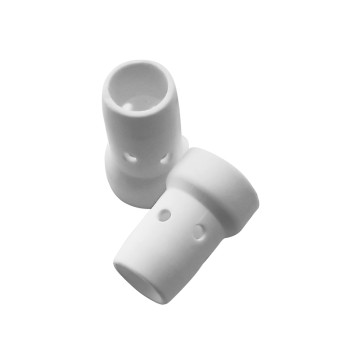
The diffuser
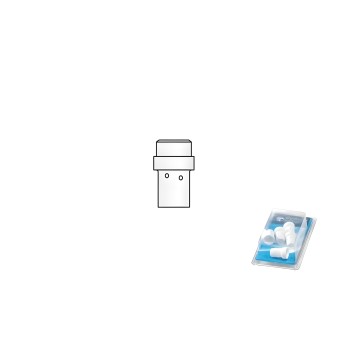
The diffuser is a tool that ensures good diffusion of gas in the nozzle of the MIG torch MAG. A specific choice of this accessory contributes to good torch performance in the welding process. It generally comes in plastic and ceramic.
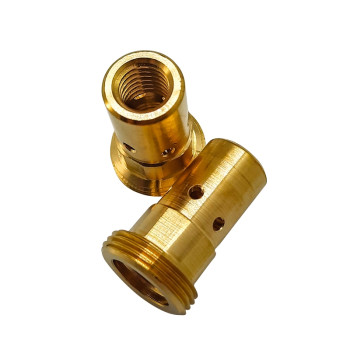
Contact tip holder
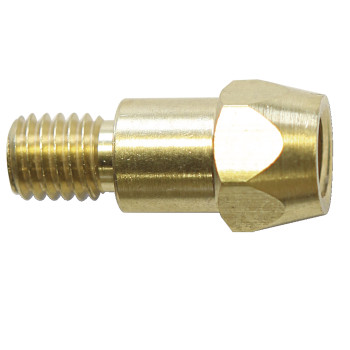
Located between the contact tip and the swan neck, it is sometimes screwed to them. It facilitates the diffusion of the shielding gas and its distribution within the nozzle. For a MIG torch, certain criteria must be considered when making a choice. These include the torch type, the material of the holder, the thread type, the welding amperage and the diameter of the tube to be connected. These points will help better define the appropriate contact tip holder.
Contact tip
One of the important parts of the torch, it plays an active role in the final result. At its level, it electrifies the welding wire. It is an accessory that must be resistant, as it is subjected to heat, spatter, current flow, etc. It comes in different qualities. The copper model is recognized as the most resistant. There are also other materials such as chrome and zirconium. It should be noted that the positioning of the contact tip relative to the nozzle is very important. For better visibility of the arc, a model protruding from the nozzle makes the task easier. It can also be used in short-circuit mode. This is the case during welding at low duty cycle and amperage. However, a model recessed in the nozzle can be beneficial to avoid spatter when using 100% carbon dioxide, for example.
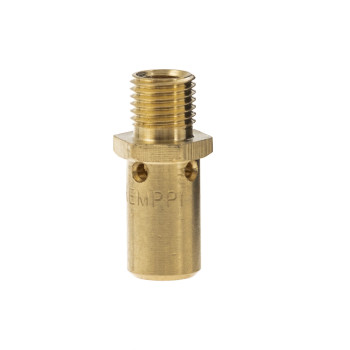
Swan neck
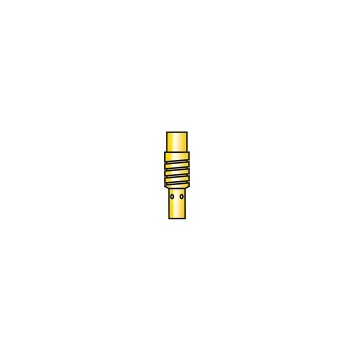
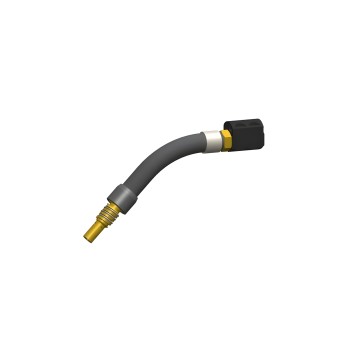
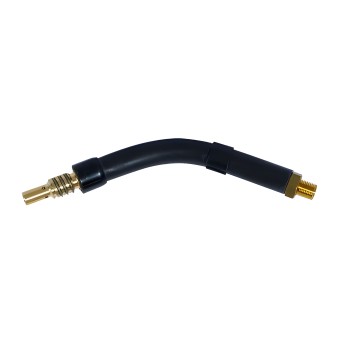
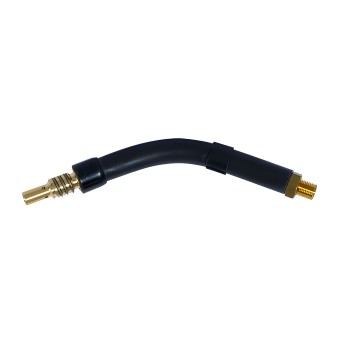
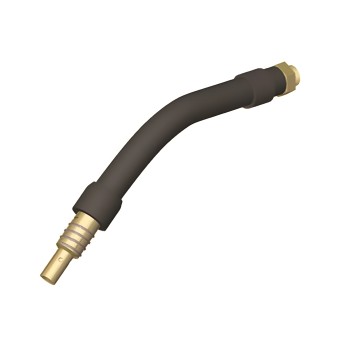
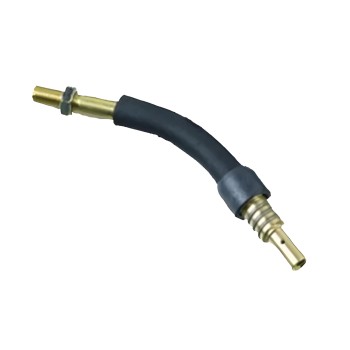
It also constitutes an important part for a better result when using the MIG torch, it helps to dissipate heat and generally comes in different lengths. An insulating disc is placed at its end to isolate the nozzle from electrical charge flow. There are several types of swan necks. The models include:
This model is recommended as a product replacement. It is suitable for cases of observed breakdowns or failure of the old swan neck on your DECA machine. Depending on the characteristics of your device, the choice of reference is left to each user.
This equipment choice is suitable for a Trafimet Ergoplus MIG-MAG torch. They correspond to specific versions. Reference MF0032, for example, is suitable for the Ergoplus 15 model. For the MIG Ergoplus 36 and Ergoplus 36 torch, version MF0034 exists and is the ideal choice.
Swan neck for HELVI Panther 132 MIG torch, M5 thread
This model is found on Helvi Panther 132 machines using M5 thread contact tips. It comes in two variants. One with a solenoid valve and a second without one. The choice should be made according to the user's needs and the expected welding result.
These equipment models are much more commonly found on Telwin brand welding machines. They are suitable for MIG-MAG welding.
Precautions to take when choosing your MIG MAG torch
For quality work, it is important to identify the torch that suits your needs. For example, a MIG torch must not exceed the welding threshold of 400 A with CO2 gas and 350 A with argon/CO2 mixed gas. All these values must be limited to 6 minutes of welding over a 10-minute period.
Likewise, over a 10-minute period, it must not exceed 150 A for a welding duration of 3 minutes. In such cases, the user will quickly find themselves with defective equipment.
Premature destruction of the torch or wear of the various accessories are the most imminent risks. Overheating caused by exceeding the welding thresholds represents an important cause of failure.


 Germany
 Netherlands
 Croatia
 Denmark
 Finland
 Greece
 Ireland
 Portugal
 Sweden
 Norway
 Bulgaria
 Estonia
 Latvia
 Lithuania
 Poland
 Czech Republic
 Romania
 Slovakia
 Slovenia
 Hungary
 Spain
Spain



 2-year warranty