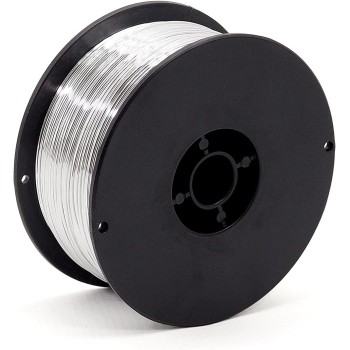
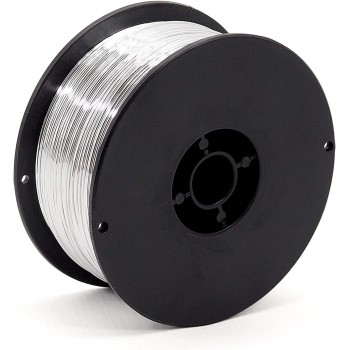
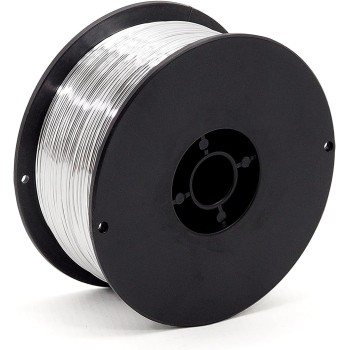
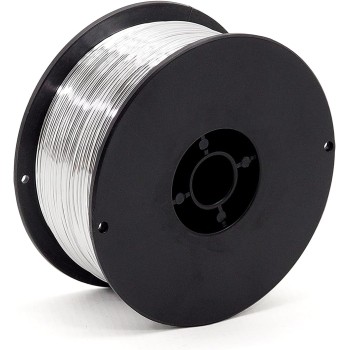
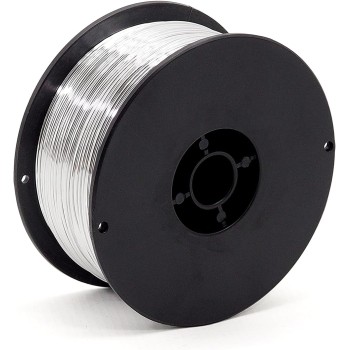
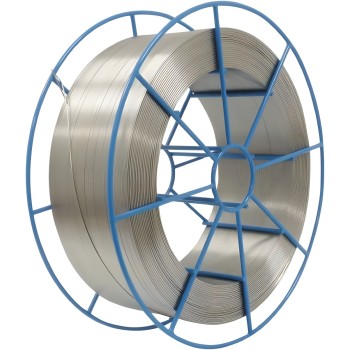
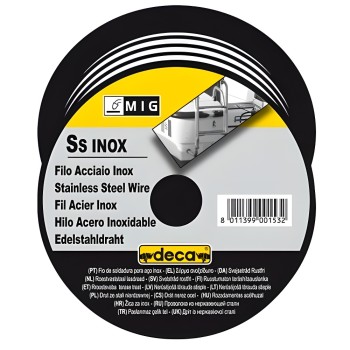
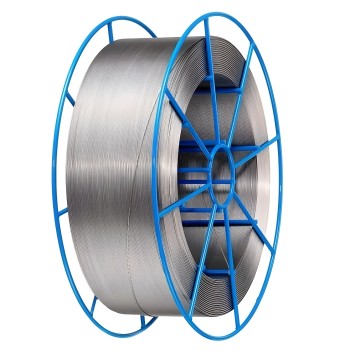
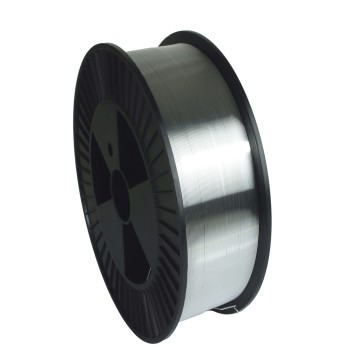
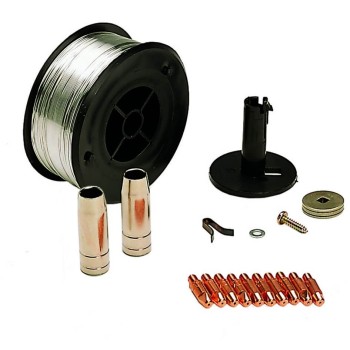
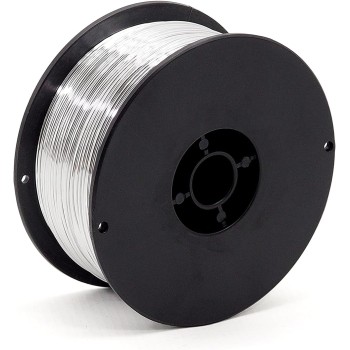
Stainless steel wire is the consumable for MIG welding of stainless steel. Chosen in the right grade, the stainless steel welding wire preserves the metal's corrosion resistance. Discover our selection of stainless steel spools for MIG stainless steel welding in common grades and diameters.
Why use a specific wire for stainless steel?
Stainless steel owes its corrosion resistance to its chemical composition. A stainless steel wire of a suitable grade maintains this composition in the weld bead. Using ordinary steel wire on stainless steel would ruin its anti-corrosion properties: consistency between base metal and filler wire is the rule in MIG stainless steel welding.
Common grades
The choice of grade depends on the base stainless steel. Stainless steel wire 308L suits stainless 304 (the most common), 316L suits 316 (better corrosion resistance), and 309L suits stainless/steel assemblies. The "L" designates a low carbon content that preserves corrosion resistance. Choosing the right grade of stainless steel spool is essential for a durable weld bead.
Gas and settings
MIG stainless steel welding requires a suitable gas, argon-based, for effective shielding and a good bead appearance. Machine settings (voltage, wire speed) are adjusted on scrap pieces to achieve a stable arc. Stainless steel wire is often welded at slightly different parameters than steel: take the time to properly set your MIG-MAG machine.
Wire diameter
As with steel, the diameter of the stainless steel wire depends on the thickness and amperage. Common diameters (0.8; 1.0; 1.2 mm) cover most needs. A contact tip of the right size and suitable drive rolls ensure regular wire feed.
Stainless steel flux-cored wire
Stainless steel flux-cored wire exists and allows stainless steel to be welded without external gas. Practical for outdoor work, it produces slag that must be removed and a less aesthetic finish than solid wire with gas. For a quality bead on stainless steel, solid wire with gas remains the reference; flux-cored is a complement for troubleshooting.
Finishing and treatment
After welding, the stainless steel bead often requires a passivation treatment to restore corrosion resistance. The quality of the wire and welding facilitates this step: a clean and regular bead is easier to pickle and passivate than a porous one.
Preparing the machine for stainless steel
MIG welding stainless steel requires a clean machine: clean the wire feeder, fit a contact tip and suitable drive rolls, and if possible dedicate a liner to the stainless steel wire to avoid contamination from steel or aluminium residues. Contamination is the enemy of stainless steel: the slightest steel particle creates a corrosion point. This discipline directly determines the quality and durability of the weld bead.
Storing the stainless steel spool
Stainless steel wire should be stored dry, in its original packaging, away from moisture and dust. An oxidised or contaminated wire produces a porous and fragile bead. Install the stainless steel spool correctly on the wire feeder, checking the unwinding direction and brake tension. Careful storage and correct installation are the keys to a sound bead and regular wire feed in stainless steel welding.
When to use stainless steel flux-cored wire
Stainless steel flux-cored wire is useful when gas access is limited or for on-site troubleshooting. It allows stainless steel to be welded outdoors, where wind would disperse the gas from a solid wire. The result is functional but less aesthetic, and the slag must be removed. For visible work or work subject to high corrosion requirements, solid wire with suitable gas remains the best solution, complemented by a passivation treatment.
For work subject to strict standards (food, medical), make sure to use a stainless steel wire of a certified grade, compatible with the sector's regulatory requirements. Consumable traceability is then a criterion in its own right.
Our advice
To MIG weld stainless steel, choose a stainless steel wire of a suitable grade (308L, 316L or 309L), with the appropriate gas and diameter. Adjust your machine on scrap pieces before working on the part. For exposed work, plan for a passivation treatment. Browse our selection of stainless steel wires and spools.
Frequently asked questions
Which wire to choose for MIG welding stainless steel?
A stainless steel wire of a suitable grade: 308L for stainless 304, 316L for 316, 309L for stainless/steel assemblies. The "L" designates a low carbon content that preserves corrosion resistance. Use an argon-based gas for shielding.
Can stainless steel be MIG welded without gas?
Yes, with stainless steel flux-cored wire, which generates its own shielding. Practical outdoors, it produces slag that must be removed and a less aesthetic finish than solid wire with gas. Solid wire with gas remains the reference for quality.
What is the difference between stainless steel wire 308L and 316L?
308L suits stainless 304 (the most common), while 316L is intended for 316, which is more corrosion resistant. The choice depends on the grade of stainless steel being welded to preserve its anti-corrosion properties.
Should stainless steel welds be treated after MIG welding?
Yes, a pickling and passivation treatment restores the protective layer destroyed by welding heat. This is essential for parts exposed to moisture or aggressive environments. A clean bead is easier to treat.


 Germany
 Netherlands
 Croatia
 Denmark
 Finland
 Greece
 Ireland
 Portugal
 Sweden
 Norway
 Bulgaria
 Estonia
 Latvia
 Lithuania
 Poland
 Czech Republic
 Romania
 Slovakia
 Slovenia
 Hungary
 Spain
Spain



 2-year warranty