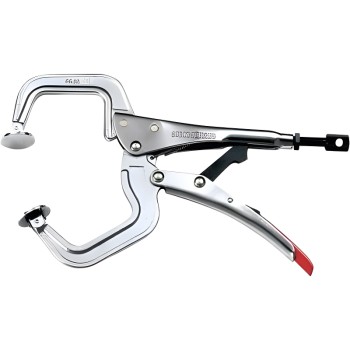
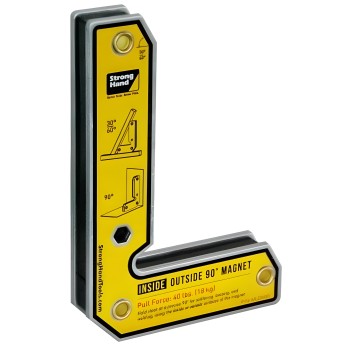
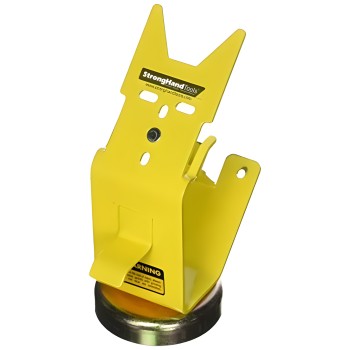
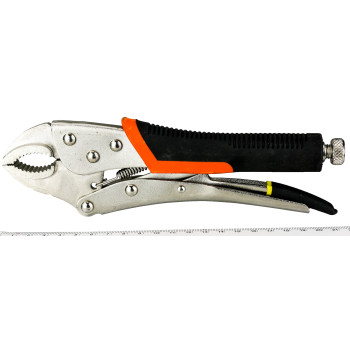
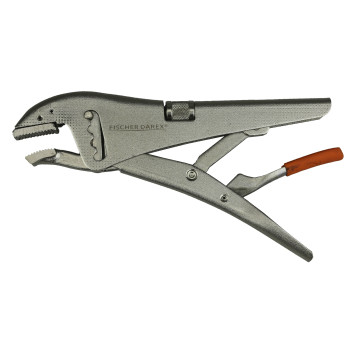
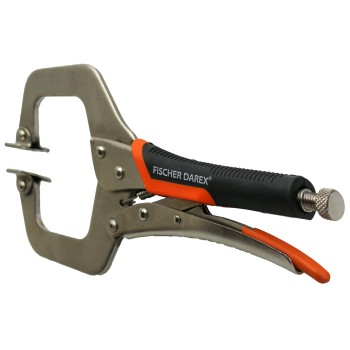
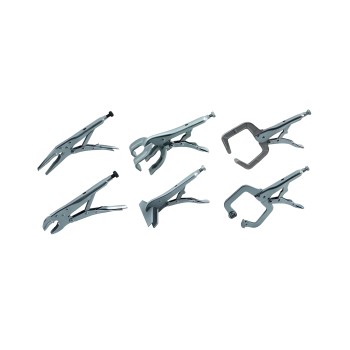
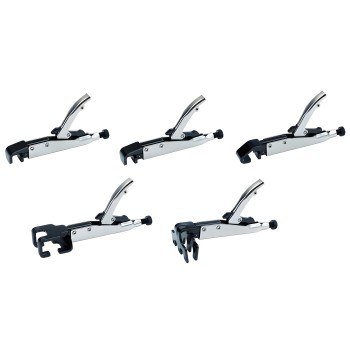
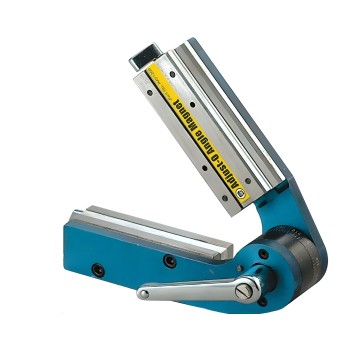
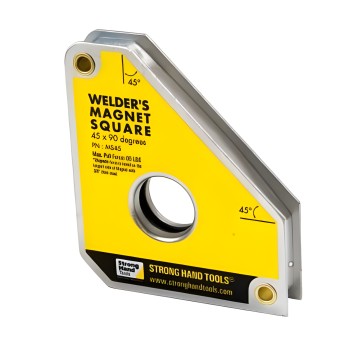
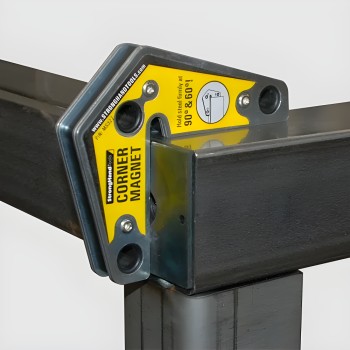
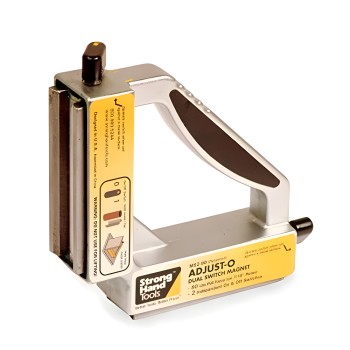
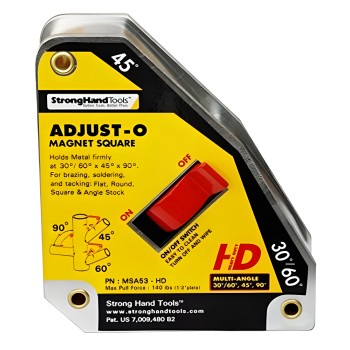
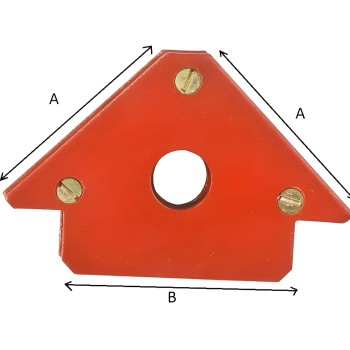
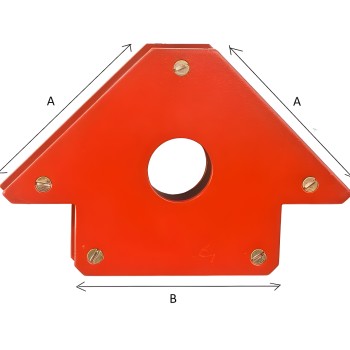
The magnetic square and the magnetic positioner hold metal parts in the correct position during welding, without complicated clamping. Indispensable for precise square assemblies, these accessories free the welder's hands. Discover our selection of magnetic squares and positioners.
What is a magnetic square used for?
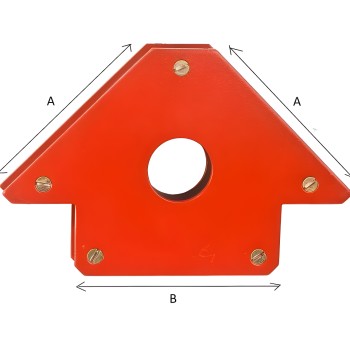
The magnetic square holds two metal parts at a precise angle (often 45°, 90°, 135°) using its powerful magnets. It replaces a third hand and ensures that the assembly stays square during tacking and welding. The welder's square is a simple but remarkably effective accessory for gaining precision and comfort on all angle assemblies.
Available angles
Most magnetic squares offer several fixed angles, the most common being 45°, 90° and 135°. Some squares offer adjustable angles to accommodate particular configurations. The choice depends on your assemblies: for the majority of ironwork and structural work, the standard fixed angles are more than sufficient and guarantee quick positioning.
Magnet strength
Holding power is the key criterion for a magnetic welding square. It must be sufficient to firmly hold the parts according to their size and weight. For heavy parts, high-capacity squares are chosen; for small parts, more compact models are sufficient. Some squares have an on/off switch that makes positioning and removal easier.
Positioners and holding accessories
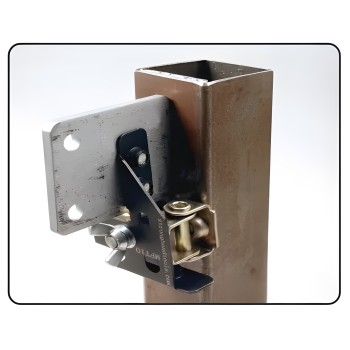
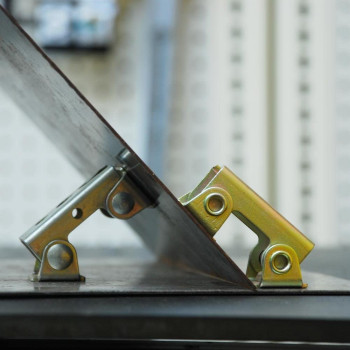
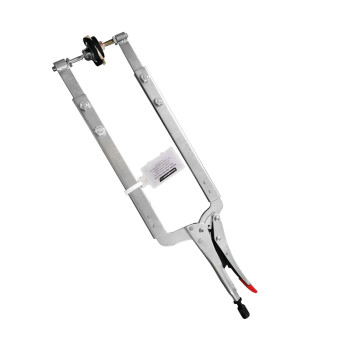
Beyond squares, welding positioners include various holding accessories: adjustable magnetic supports, clamps and stops. Combined with a perforated welding table, they allow parts to be locked in any configuration. These welding positioner tools are the key to precise and repeatable assemblies, limiting distortion caused by heat.
Limiting distortion
Proper part holding is not only about precision: it also limits distortion. The heat of welding causes metal to move, and poorly held parts shift or twist. A welding square or robust positioner maintains the geometry during welding and cooling, which reduces rework and improves the final quality of the work.
Magnet maintenance
Magnetic squares attract spatter and metal filings, which accumulate on the magnets. Clean them regularly to preserve their holding power and contact precision. Avoid violent impacts that can demagnetise or break cast iron models. Well maintained, a magnetic square retains its effectiveness for a long time.
Squares and welding table
The magnetic square works best when combined with a perforated welding table and other clamping accessories. Together, they allow parts to be positioned in any configuration and held firmly during tacking. For complex assemblies, multiplying holding points — squares, toggle clamps, stops — guarantees perfect geometry. It is this combination of welding positioner tools that transforms an approximate fit-up into a precise and repeatable assembly.
Choosing between several squares
To equip yourself well, it is often useful to have several magnetic squares of different sizes: small squares for light parts and tight angles, larger and more powerful ones for heavy structures. Models with an on/off switch, which allow the magnet to be activated or deactivated, greatly facilitate positioning and removal, especially on heavy parts. A small assortment of varied welder's squares covers most situations encountered in the workshop.
A cost-effective accessory
The magnetic square is one of those low-cost accessories that radically changes the comfort and quality of work. For a few euros, you gain precision, free your hands and reduce distortion. It is often one of the first purchases recommended after the welder itself, so immediate is its benefit. Combined with a welding table, the magnetic square transforms the way parts are assembled, from a simple frame to more complex structures.
Our advice
For precise and comfortable assemblies, the magnetic square and the magnetic positioner are essential accessories. Choose angles according to your work and a magnet strength suited to the weight of the parts; models with an on/off switch make handling easier. Combine them with a welding table for optimal holding. Browse our selection of magnetic squares and positioners.
Frequently asked questions
What is a magnetic square used for in welding?
It holds two metal parts at a precise angle (often 45°, 90°, 135°) using its magnets, replacing a third hand. It ensures that the assembly stays square during tacking and welding, which improves precision and comfort.
What angles does a magnetic square offer?
The most common are 45°, 90° and 135°, in fixed angles. Some squares offer adjustable angles for particular configurations. For the majority of ironwork and structural work, the standard fixed angles are sufficient.
How to choose the strength of a magnetic square?
According to the size and weight of the parts: the holding power must be sufficient to firmly grip the assembly. For heavy parts, squares with high capacity are chosen; for small parts, compact models suffice. An on/off switch makes handling easier.
Do magnetic positioners limit distortion?
Yes: good holding prevents parts from shifting or twisting under the effect of heat. A square or robust positioner maintains the geometry during welding and cooling, which reduces rework and improves the final quality.


 Germany
 Netherlands
 Croatia
 Denmark
 Finland
 Greece
 Ireland
 Portugal
 Sweden
 Norway
 Bulgaria
 Estonia
 Latvia
 Lithuania
 Poland
 Czech Republic
 Romania
 Slovakia
 Slovenia
 Hungary
 Spain
Spain



 2-year warranty